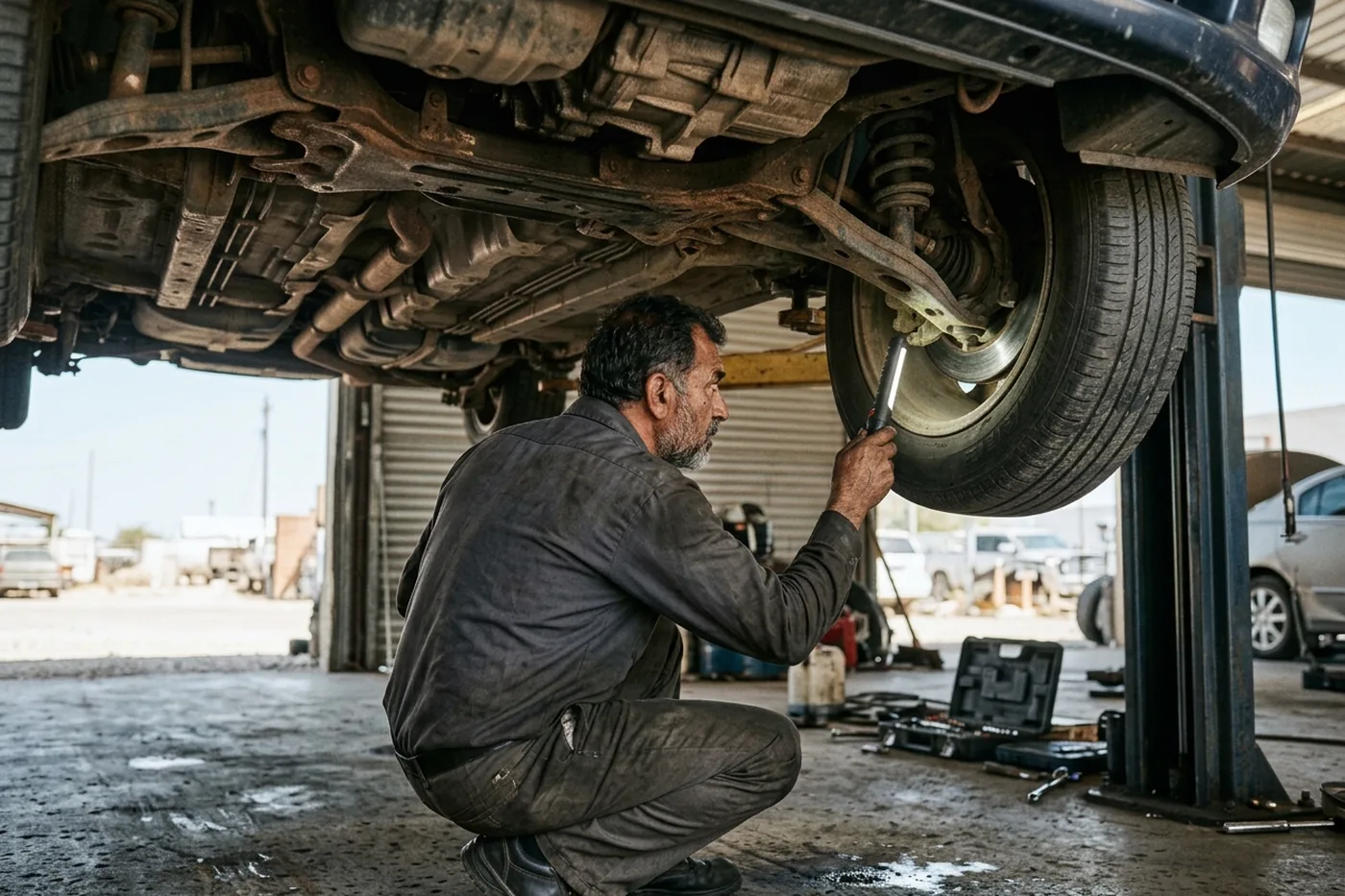
A pre-purchase inspection is an independent mechanic examining a used vehicle before you commit. It typically costs between $100 and $250 and takes an hour or two. On a car costing fifteen thousand dollars, that is a rounding error against the risk it removes.
What a good inspection covers
- On the lift. Frame and undercarriage, rust, evidence of accident repair, exhaust condition, suspension components, leaks from engine, transmission and differential.
- Engine and transmission. Compression or leak-down testing where warranted, fluid condition, belts, hoses, cooling system, mounts.
- Brakes and tires. Pad and rotor measurement, tread depth, tire age from the date code, uneven wear that points to alignment or suspension problems.
- Electronics. A scan for stored and pending fault codes, including codes recently cleared, plus a check that emissions readiness monitors have completed.
- Road test. Behavior under load, shift quality, steering, braking, noises that only appear at speed.
The readiness monitor detail
This one is worth understanding because it catches a specific trick. When fault codes are cleared, the vehicle's emissions readiness monitors reset and take a number of driving cycles to complete. A car presented for sale with codes cleared moments earlier shows no check engine light but has incomplete monitors. A scan tool reveals it immediately. A visual inspection of the dashboard does not.
Where to have it done
Use an independent shop you choose, not one the seller recommends. A marque specialist is worth the extra effort for a European or performance vehicle, where the common failure points are specific and expensive. Some mobile inspection services will come to the seller, which is useful when the car is far away, though they cannot put it on a lift.
If a private seller refuses an inspection, that is your answer. If a dealership refuses, the same applies. A seller with nothing to hide has no reason to object to an hour at a workshop.
An inspection tells you about the car's condition. A history report tells you about its past: reported accidents, title brands, odometer readings and recall status. The two answer different questions. Check open recalls free by VIN through the NHTSA recall lookup, which shows unrepaired safety recalls regardless of who owned the car.
Using the result
An inspection rarely comes back perfect, and it is not meant to. What you want is a categorized list.
Deal-breakers: structural damage, frame repair, evidence of flood exposure, a failing transmission, severe rust on structural members. Walk away.
Negotiating items: tires near the end of life, brakes due, a leaking gasket, suspension components needing replacement. Get a written estimate and ask for the price to come down by that amount, or for the work to be done before delivery.
Noted for later: maintenance due within the year, minor cosmetic issues. Budget for them and move on.
The one thing an inspection cannot do
It cannot predict the future. A mechanic examines the vehicle as it is on that day, and a component in good condition can still fail next month. What the inspection buys you is the elimination of known, present, expensive problems, and a factual basis for the price. That is worth a hundred dollars every time.