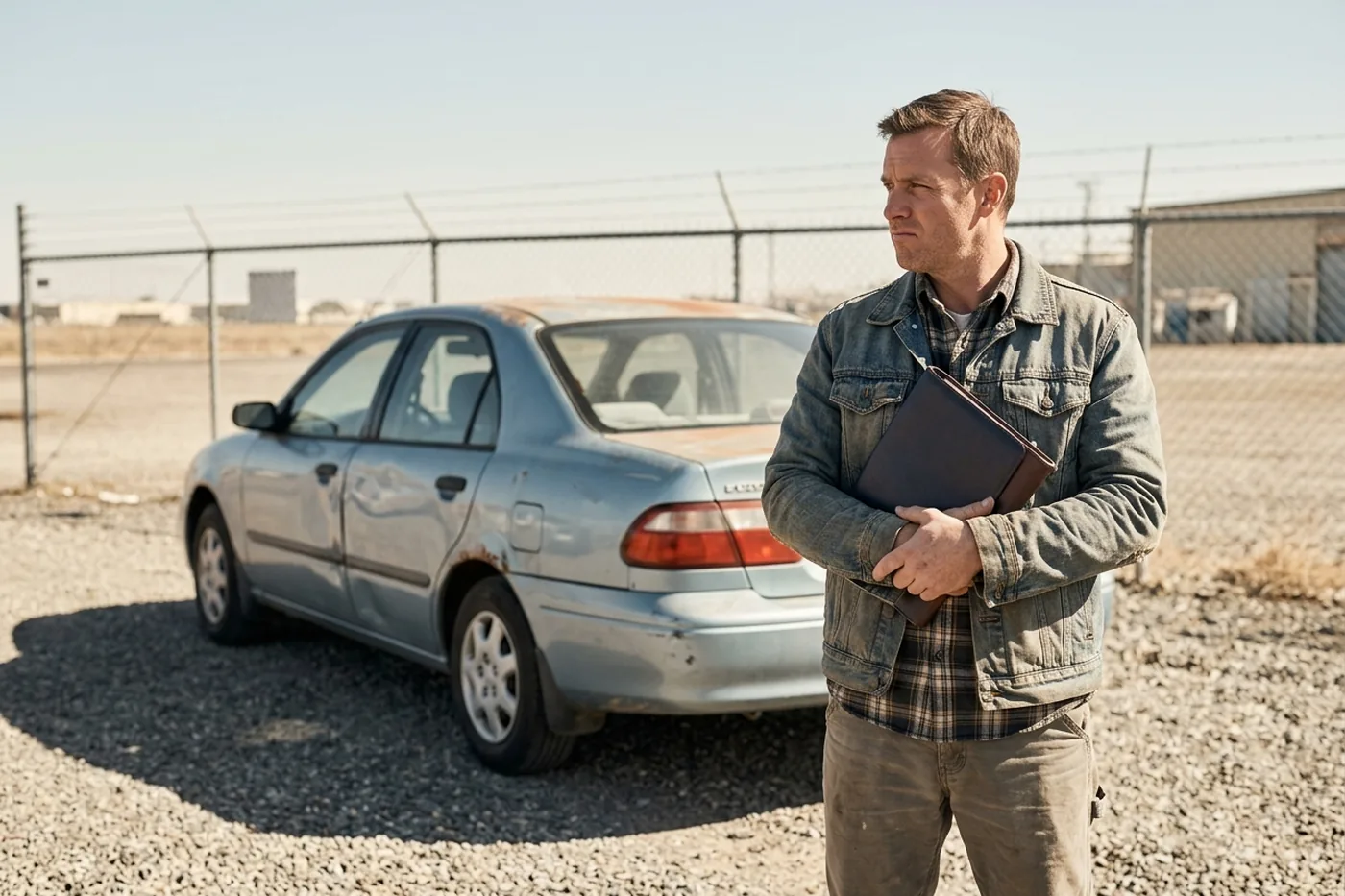
A title brand is a permanent notation on a vehicle's title record indicating that something significant happened to it. Brands are applied by state motor vehicle agencies, they follow the vehicle across state lines, and they cannot be removed.
The common brands
Salvage. An insurer declared the vehicle a total loss, meaning repair cost exceeded a threshold percentage of its value. That threshold varies by state. A salvage vehicle generally cannot be registered or driven on the road until it is repaired and inspected.
Rebuilt or reconstructed. A previously salvaged vehicle that has been repaired and passed a state inspection, making it road legal again. The brand stays on the title permanently.
Flood. The vehicle sustained water damage sufficient to be declared a loss. Flood damage is the brand that most often produces problems appearing months or years later, because water corrodes wiring harnesses and connectors progressively.
Lemon law buyback. The manufacturer repurchased the vehicle under a state lemon law after repeated unsuccessful repair attempts.
Odometer discrepancy. The mileage reading is known to be inaccurate or cannot be verified.
What a brand costs you
| Consequence | Effect |
|---|---|
| Resale value | Typically 20% to 50% below a clean-title equivalent |
| Insurance | Some insurers decline; comprehensive and collision may be limited or unavailable |
| Financing | Many lenders will not finance a branded vehicle |
| Buyer pool | Substantially smaller when you come to sell |
| Warranty | Remaining manufacturer warranty is generally void |
Title washing
Because brand definitions and thresholds vary between states, a vehicle branded in one state has historically sometimes been retitled in another with the brand omitted. The National Motor Vehicle Title Information System exists to make this harder: it is a federal database that states check, and it carries brand history across jurisdictions. Any vehicle history you buy should draw on it.
The practical protection is simple. Check the title document itself, not just the seller's description. Compare the VIN on the title to the VIN on the dashboard and door jamb. A seller who cannot produce the title, or whose name does not match it, is a seller to leave.
Should you ever buy one
A rebuilt-title vehicle can be a reasonable purchase in narrow circumstances: you are paying a genuinely reduced price, you have had it inspected by a mechanic who knows what repaired collision damage looks like, you can insure it, you are not financing it, and you intend to keep it for years rather than resell.
Flood-branded vehicles are the exception to that reasoning. Electrical corrosion is progressive, unpredictable and expensive, and a flood car that drives perfectly today can develop faults for years. The discount rarely compensates for it.
The federal National Motor Vehicle Title Information System explains what brands mean and lists approved providers of history reports drawn from state title records.