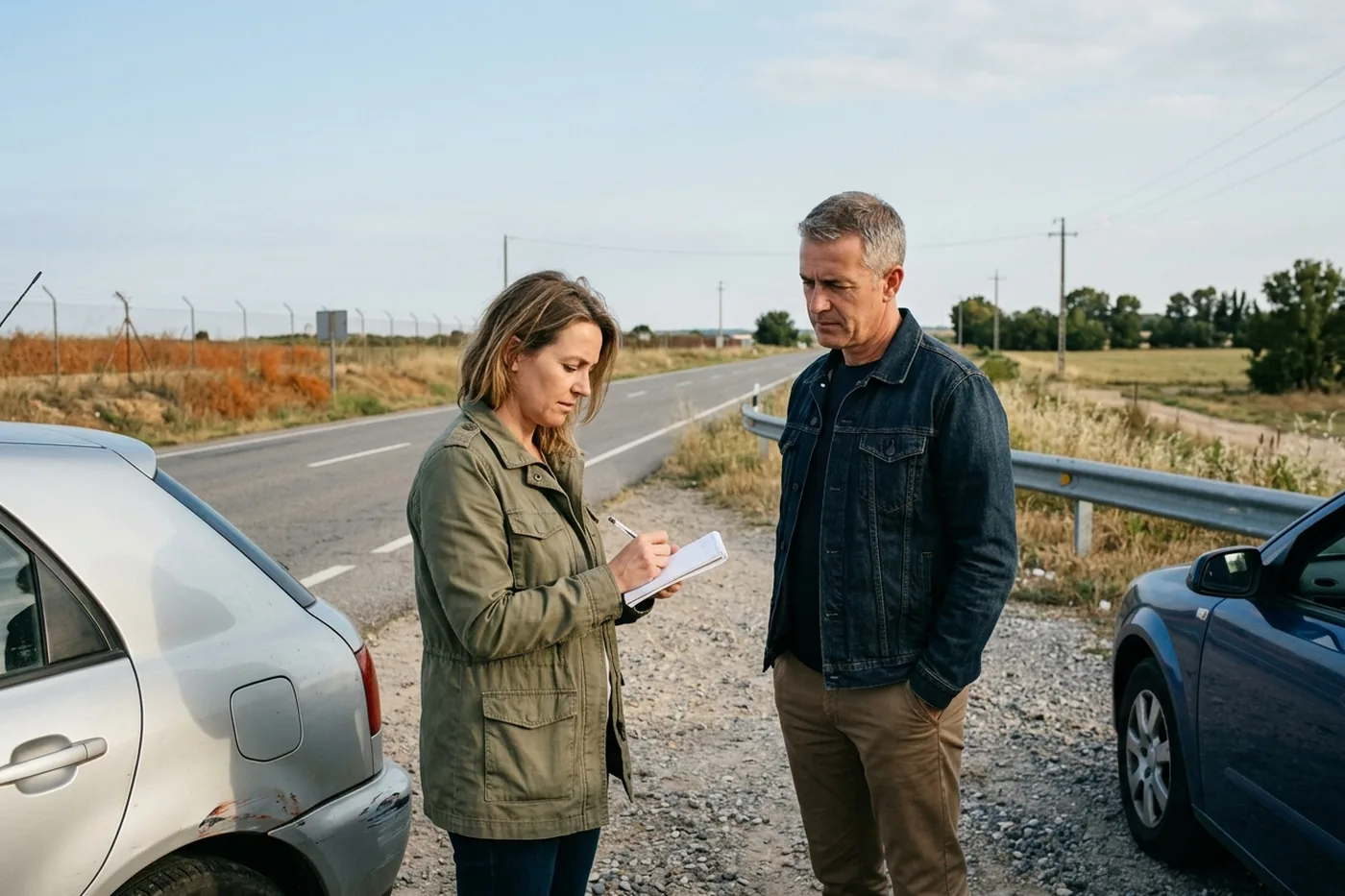
The steps below are in order for a reason. Each one makes the next easier.
1. Safety first
Check for injuries. Call 911 if anyone is hurt, if there is significant damage, or if the road is blocked. Move vehicles out of traffic if they are driveable and it is safe, otherwise leave them and get yourself clear of the roadway. Hazard lights on.
2. Call the police
Many states require a report above a damage threshold or where anyone is injured. Even where it is optional, a police report is an independent record that settles disputes about what happened. Get the report number and the officer's name before you leave.
3. Exchange the right information
- Name, address, phone number
- Insurance company and policy number
- Driver's license number and plate number
- Vehicle make, model and VIN if accessible
Get the same from any witnesses, plus their account of what they saw.
4. Photograph more than feels necessary
Wide shots showing both vehicles and their positions, close-ups of damage on every vehicle, the other vehicle's plate, skid marks, debris, traffic signals and signs, road conditions and weather, and any visible injuries. Photograph the other driver's license and insurance card rather than copying the numbers by hand.
Do not apologize or accept blame at the scene, even reflexively. Fault is determined by the evidence and the applicable law, and you may not know what happened. Describe facts to the police, not conclusions about who caused it.
5. Report it to your insurer
Promptly, even if you do not intend to claim, and even if the other driver suggests settling privately. Policies require prompt notice, and the other driver can decide to claim later regardless of what was agreed at the kerbside. Reporting is not the same as claiming.
6. Get checked medically
Some injuries, particularly soft tissue and concussion, present hours or days later. A medical record created close to the event matters both for your health and for any injury claim, since a long gap between accident and treatment is the first thing an insurer questions.
7. Keep a file
Claim number, adjuster name and direct number, a log of every call with date and substance, all photographs, the police report, repair estimates, medical records and receipts for anything you had to pay: rental car, towing, rideshare.
Crash statistics, vehicle safety ratings and recall information are published by NHTSA, and the Federal Trade Commission's auto repair guidance covers estimates, authorization and what an invoice should contain.
On repair shop choice
In most states you choose the repair shop, not the insurer. An insurer may recommend a network shop, and those arrangements often come with a workmanship guarantee, but a recommendation is not a requirement. If you prefer an independent shop or a marque specialist, you are generally entitled to use one.
If you disagree with the damage assessment, you can ask for a re-inspection and obtain your own estimate. Most policies also contain an appraisal clause for resolving valuation disputes without litigation. Your state insurance department handles complaints about claim handling; the NAIC directory links to each.